
Kitchen Organization Ideas for Small Kitchens
Eight tips that actually work. No gimmicks, no "just buy a bigger house" energy — just things that make your kitchen feel twice the size and work three times better.
TL;DR
Small kitchens aren't cursed — they're just honest about what you actually use. The secret isn't buying more storage products. It's using vertical space, being honest about what earns its spot on the counter, and choosing square containers over round ones (which waste 30% more space — a number that still annoys me every time I think about it).
The one rule that changes everything
Most people organize their kitchen wrong. Not "I disagree with their aesthetic choices" wrong — structurally wrong. They buy containers first and figure out what goes in them later. That's like buying shoes and then deciding what size your feet are.
The rule is simple: measure your space, audit what you have, then buy containers. In that order. Never skip the audit. I helped a friend do this last month and we discovered she owned four potato mashers. Four. She lives alone with one cat. The cat has not once requested mashed potatoes.
Vertical space is free real estate
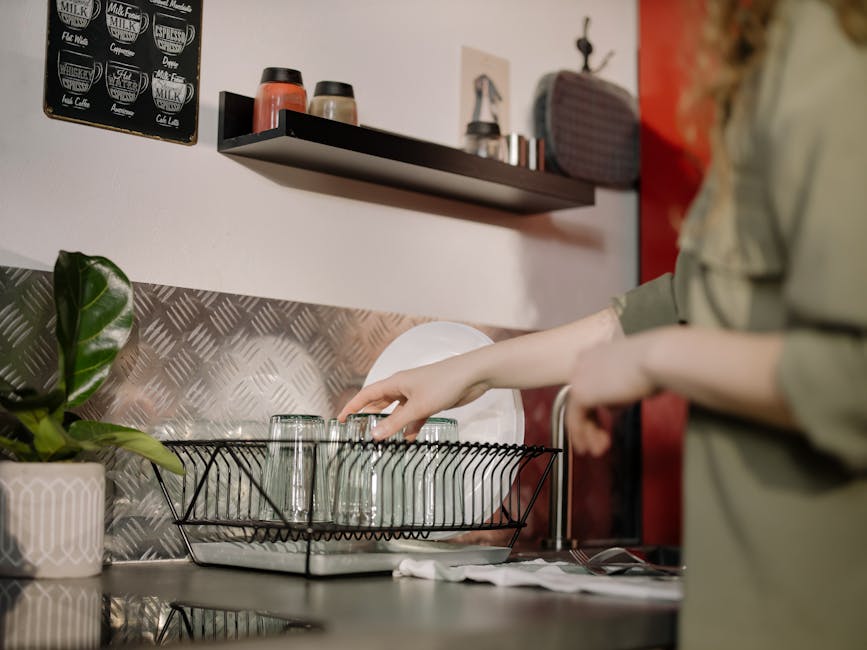
The number one mistake in small kitchens? Ignoring the walls. Your counter is precious — treat it like oceanfront property. Your walls, meanwhile, are free land just sitting there, unclaimed, waiting for a revolution.
Magnetic knife strips save you a knife block's worth of counter space (roughly 6×8 inches — that's 48 square inches of reclaimed territory). Wall-mounted spice racks, over-the-cabinet hooks for mugs, and floating shelves above the sink all convert dead wall space into functional storage. The math is simple: every item that goes on the wall is an item that isn't on your counter.
Square containers. Not round. Ever.
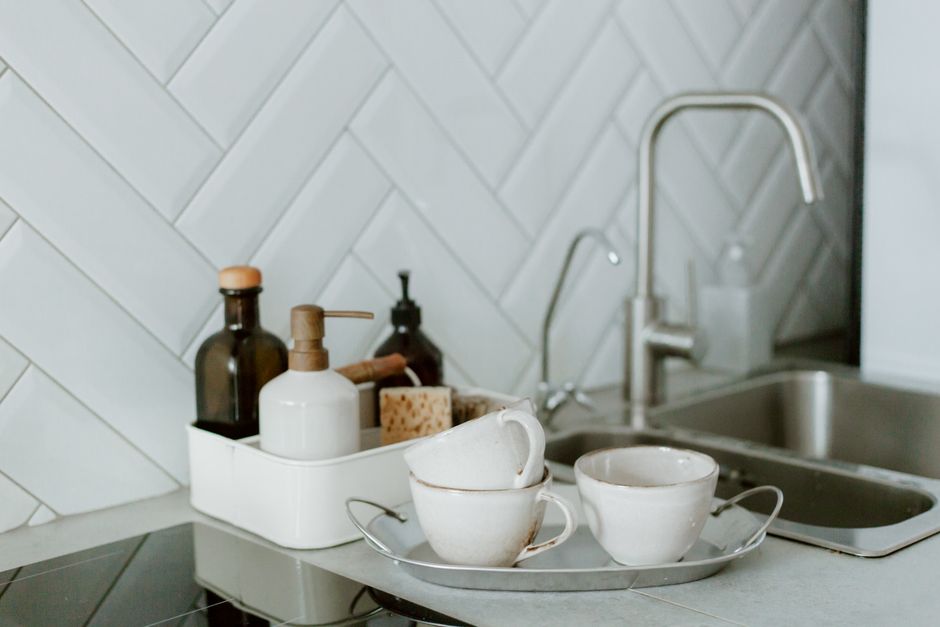
This is the hill I will die on. Round containers waste approximately 30% more space than square ones of the same volume. This isn't opinion — it's geometry. Four circles can never fill a rectangle completely. Four squares can.
Get clear, stackable, square containers. Glass if you can afford it (you can see the contents without a label — which means you'll actually use what's in there). Plastic if you're on a budget. But square. Always square.
Do not buy containers before measuring your shelves. I have made this mistake. You end up with beautiful square glass containers that are two inches too tall for your shelf height, and now you have $25 worth of very nice boxes that live in a different cabinet entirely. Measure first. Always.
The appliance honesty test
Take every appliance off your counter. All of them. Even the toaster. Now, for the next week, only put back the ones you actually use. Not the ones you plan to use. Not the ones your mother-in-law bought you. The ones you reach for.
If your countertop blender has gathered enough dust to start a small farm, it doesn't deserve oceanfront property. It deserves a cabinet. Be ruthless. Your kitchen will thank you.
Shelf risers: $9 of pure genius
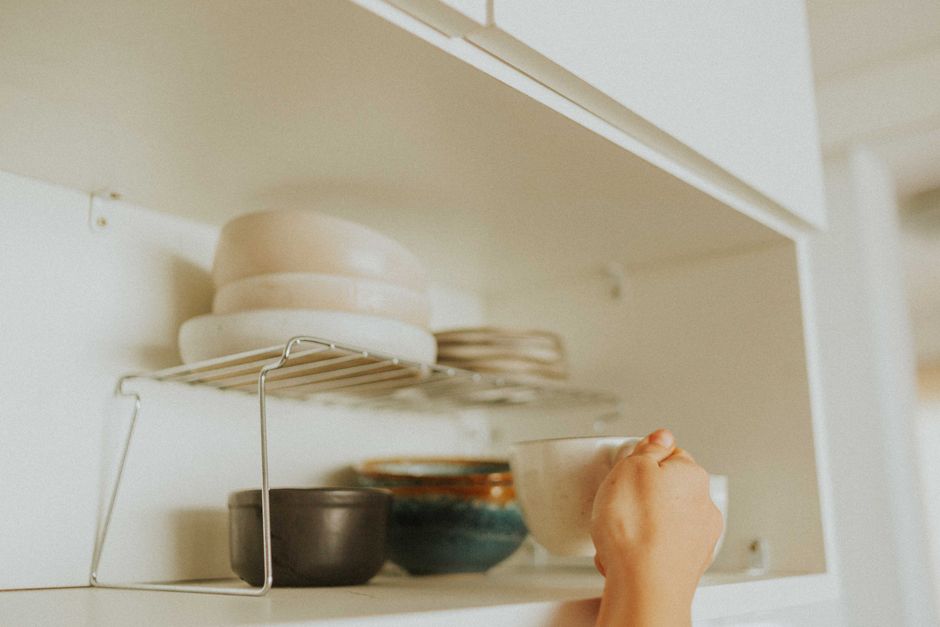
Shelf risers are the most boring-looking kitchen product in existence. They are also, dollar for dollar, the most effective. A $9 shelf riser doubles the usable vertical space in any cabinet. That turns one shelf into two. Every cabinet in your kitchen has empty headroom above your tallest item — this is the easiest win in home organization.
Put them in your plate cabinet, your mug cabinet, your pantry. Everywhere. They cost less than a pizza and work every day for the rest of your life.
Magnetic everything
Your refrigerator has four usable surfaces (front, two sides, top) and most kitchens use exactly none of them. Magnetic spice tins, magnetic paper towel holders, and magnetic hooks for utensils all convert your fridge into storage space. A magnetic spice rack holds 6-12 tins and costs about $15.
The fridge is the largest metal surface in your kitchen. Use it.
The tension rod trick nobody tells you about
Tension rods cost about $7. Put one under your sink, hanging between the cabinet walls, and suddenly you have a place to hang spray bottles. The wasted vertical space under your sink — where you currently shove everything into a chaotic pile — becomes organized, accessible, and almost pleasant to look at.
This trick alone saves about 30% more usable space under the sink. I've done it in three apartments now and it never stops feeling like cheating.

Zone your kitchen like a restaurant
Professional kitchens don't organize by category — they organize by zone. The prep zone has knives, cutting boards, and mixing bowls. The cooking zone has pots, pans, and spatulas near the stove. The storage zone has containers and wraps near the fridge.
Group your items by what you do with them, not what they are. Your spatula doesn't need to be best friends with your wooden spoons — it needs to be within arm's reach of your stove. This sounds obvious and it is. But almost nobody does it.
What this actually costs
Here's the honest math. You can do everything in this article for under $50:
- Shelf risers (pack of 4): $9
- Square glass containers (set of 6): $18
- Magnetic knife strip: $12
- Tension rod: $7
- Wall-mounted spice rack: $10
That's $56 total. Skip the spice rack and you're at $46. This is not a lifestyle blog where the solution costs $400 — this is practical advice that works for a rented apartment with landlord-beige walls and a kitchen the size of a bathroom. (The bathroom is probably bigger. Fair.)
When to stop organizing and start cooking
There's a point where organization becomes procrastination. If you're reading a fourth blog post about kitchen organization, you've probably crossed it. The goal isn't a Pinterest-perfect kitchen — it's a kitchen where you can find your spatula without cursing.
Do the audit. Buy the shelf risers. Hang the magnets. Then stop. Go make something. A kitchen that's used is always better than a kitchen that's perfect.
And if your cat eventually asks for mashed potatoes, you know where to find the masher.
Written by the Home Barakah team. We curate kitchen essentials, organization tools, and home decor that bring beauty and intention into your daily life. We believe every home — no matter how small — deserves a little barakah.